

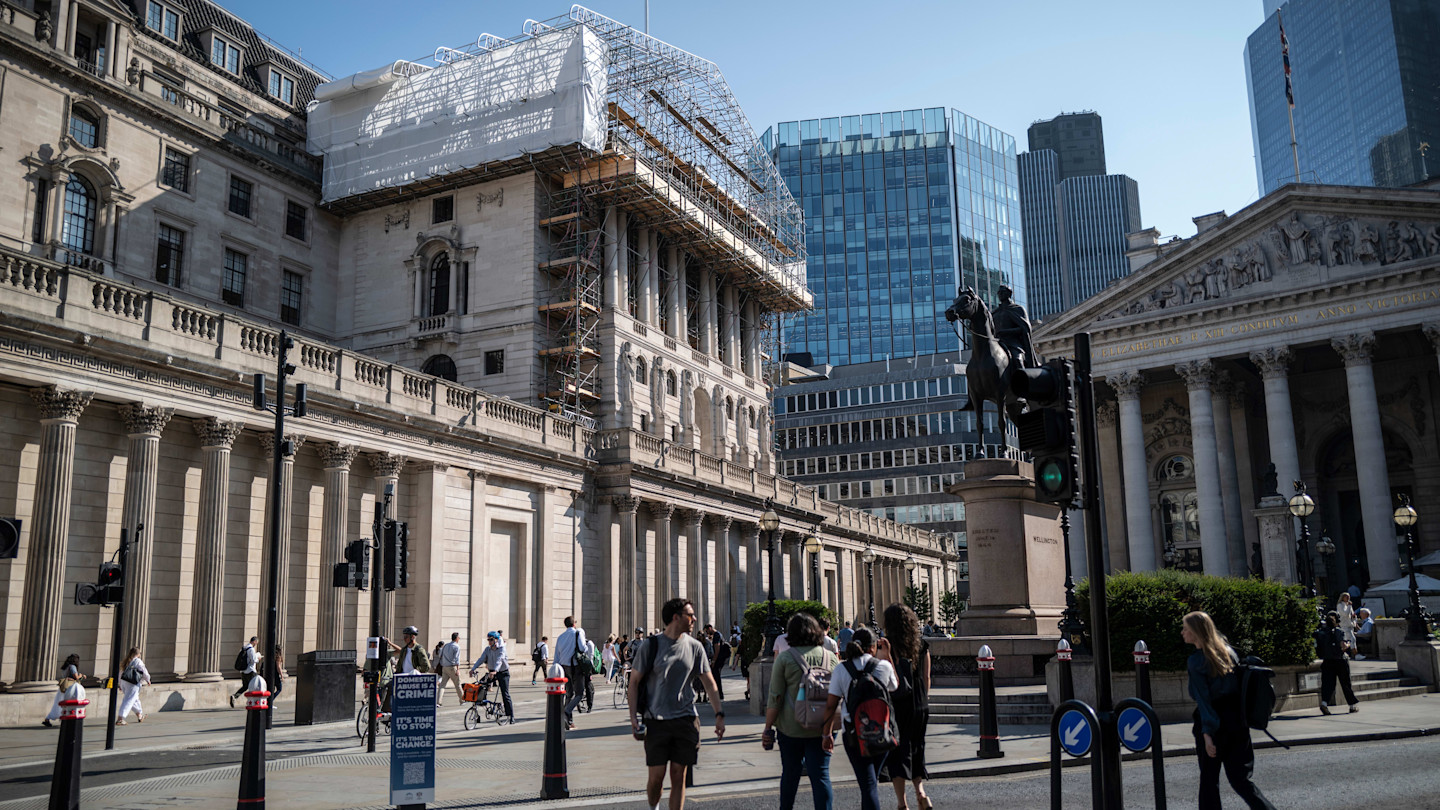

The UK economy is growing, but the recovery is far from straightforward.
Official figures show real GDP increased 0.4% in the second quarter of 2026, following 0.6% growth in the first quarter. The economy was 1.2% larger than a year earlier, while monthly GDP increased 0.3% in June.
At first glance, that looks encouraging.
But inflation has started moving higher again, the labour market is losing momentum and the Bank of England is keeping interest rates at 3.75% while watching for signs that renewed energy-price pressures could become embedded in wages and prices.
So what is actually happening to the UK economy?
The short answer is that Britain is still expanding, but the economy is operating under significant pressure.
Key Facts
- UK GDP grew 0.4% in Q2 2026.
- GDP grew 0.6% in Q1.
- GDP was 1.2% higher than a year earlier.
- June GDP increased 0.3%.
- CPI inflation increased to 2.9% in July.
- CPIH inflation reached 3.1%.
- Bank Rate remains 3.75%.
- UK unemployment was 4.9% in April–June.
- Vacancies fell to 707,000.
- Regular pay growth was 3.5%, while private-sector regular pay growth was 2.8%.
- The August Composite PMI rose to 52.5, indicating continued private-sector expansion.
Table of Contents
- What is happening to the UK economy?
- Is the UK economy growing?
- Why is inflation rising again?
- What is happening to UK interest rates?
- Is the UK jobs market weakening?
- What are businesses doing?
- What does this mean for households?
- What does the UK economy mean for Ireland?
- What are investors watching?
- What happens next?
What Is Happening to the UK Economy?
The UK economy is currently showing a mixed picture.
GDP growth remains positive, which means the economy is expanding rather than contracting. But the underlying pace of activity is considerably less impressive than the headline quarterly figures suggest.
The Bank of England estimated underlying GDP growth at around 0.1% in Q2, while headline GDP growth was 0.4%. The central bank said subdued momentum was continuing and that higher energy prices and tighter financial conditions were creating additional pressure.
That means the UK is not facing an immediate recession, but neither is it experiencing strong, broad-based growth.
Is the UK Economy Growing?
Yes.
The ONS estimates that real GDP increased 0.4% between April and June 2026, after growing 0.6% during the first quarter.
Services were the biggest contributor, with output increasing 0.5%. Construction rose 0.3%, while production showed no growth.
Monthly figures also provided some encouragement.
GDP increased 0.3% in June after no growth in May and a 0.1% fall in April.
The economy therefore entered the second half of the year with positive momentum.
However, GDP figures should not be interpreted as a complete measure of household prosperity. GDP can grow even when individual households continue to face high costs and weak financial confidence.
Why Is UK Inflation Rising Again?
Inflation is one of the biggest problems facing the UK economy.
The ONS reported that CPI inflation increased from 2.6% in June to 2.9% in July 2026.
CPIH, which includes owner-occupiers’ housing costs, increased from 2.8% to 3.1%.
The increase was heavily influenced by housing and household services.
The annual inflation rate for that category reached 4.1%, with gas prices rising sharply following the July energy-price-cap change.
This creates a difficult situation because higher energy prices affect much more than household utility bills.
Businesses also pay for:
- electricity
- gas
- transport
- logistics
- manufacturing
- refrigeration
- office space
- supply chains
Those higher costs can eventually feed into consumer prices.
What Is Happening to UK Interest Rates?
The Bank of England has kept Bank Rate at 3.75%.
At its July meeting, six members of the Monetary Policy Committee voted to maintain the rate, while three wanted an increase to 4%.
That split shows how uncertain the outlook has become.
The Bank wants inflation to return sustainably to its 2% target, but higher interest rates can weaken economic activity.
For households, rates affect:
- mortgage payments
- personal loans
- savings returns
- credit costs
For businesses, they affect:
- borrowing
- investment
- working capital
- property
- expansion decisions
The next scheduled MPC decision is on 17 September 2026.
Is the UK Jobs Market Weakening?
There are signs that it is.
The unemployment rate was 4.9% in April–June 2026.
More revealing is the vacancy data.
The ONS estimated that vacancies fell to 707,000 in May–July. That was the lowest level outside the pandemic period since September–November 2014.
Payrolled employment also declined over the year.
The ONS estimates that payrolled employees fell by 78,000 between June 2025 and June 2026.
This suggests employers are becoming more cautious.
The situation is particularly important for younger workers and people trying to enter the labour market because weaker hiring can affect opportunities even before unemployment rises substantially.
Are UK Wages Still Rising?
Yes, but wage growth is slowing.
Regular earnings increased by 3.5% year-on-year in April–June.
However, private-sector regular earnings grew by only 2.8%, while public-sector regular pay growth was 6.1%.
In real terms, after adjusting for CPIH inflation, regular pay increased 0.5%.
That is positive, but relatively modest.
The key issue for households is not simply whether wages are rising.
It is whether wages are rising faster than the cost of living.
What Are Businesses Doing?
The business sector is showing more resilience than some of the harder economic indicators suggest.
The August S&P Global flash Composite PMI increased to 52.5, up from 52.2 in July. A reading above 50 indicates expansion.
Services activity reached a six-month high.
That suggests businesses were experiencing improved activity as the third quarter began.
But the survey also needs to be treated carefully.
A PMI is a business survey, not an official GDP measurement.
The stronger August reading therefore provides evidence of improving momentum, rather than proof that the UK economy is entering a major boom.
What Does This Mean for Households?
For households, the economic picture is complicated.
On one side:
- GDP is growing.
- real wages are positive;
- consumer confidence has improved;
- businesses are still expanding.
On the other:
- inflation has increased;
- energy costs are putting pressure on budgets;
- borrowing remains relatively expensive;
- job vacancies are declining.
This explains why economic headlines can sometimes appear contradictory.
The economy can grow while households still feel financially squeezed.
What Does This Mean for Ireland?
The UK economy matters directly to Ireland because of the close economic relationship between the two countries.
If UK consumers reduce spending, Irish exporters and businesses exposed to UK demand can be affected.
Sterling movements also matter.
A weaker pound can change the competitiveness of Irish goods in Britain, while movements in the euro-sterling exchange rate can influence the cost of imports and cross-border activity.
Ireland is also experiencing its own inflation pressures.
The Central Statistics Office reported Irish CPI inflation of 3.4% in July 2026, while unemployment was 5.1%.
The two economies therefore face some similar pressures, although their economic structures are different.
What Are Investors Watching?
Investors are likely to focus on five issues.
1. Inflation
The most immediate question is whether July’s rise to 2.9% is temporary or the beginning of a more persistent acceleration.
2. Bank Rate
Markets will watch the Bank of England’s September decision and the voting split on the MPC.
3. Labour market
Vacancies, employment and wage growth will help determine whether domestic inflation pressure continues to ease.
4. Energy prices
Higher energy prices could put renewed pressure on inflation and household spending.
5. Government finances
Fiscal policy will also be important as the government approaches its autumn Budget.
The OBR’s March forecast projected UK real GDP growth of 1.1% in 2026, although subsequent economic developments mean forecasts should be treated as conditional rather than guaranteed.
What Are the Risks?
The main risks are increasingly connected.
Higher energy prices can raise inflation.
Higher inflation can delay interest-rate cuts.
Higher rates can weaken consumer spending and business investment.
Weaker demand can reduce hiring.
Reduced hiring can weaken household confidence.
That creates the possibility of a slower-growth environment in which inflation remains uncomfortable.
The Bank of England has specifically highlighted the uncertainty surrounding the scale and duration of the energy shock and the possibility of second-round effects on wages and prices.
What Are the Opportunities?
There are also positive developments.
The UK economy has demonstrated resilience during a period of considerable global uncertainty.
Services activity is expanding.
Business surveys have improved.
Real wages are still increasing.
Consumer confidence has improved.
Technology and AI-related investment may also provide longer-term productivity opportunities, although the economic benefits will depend on how effectively businesses convert investment into higher output.
The bigger structural challenge remains productivity.
Sustained improvements in productivity would give the UK more room to increase wages and living standards without creating the same inflationary pressure.
What Happens Next?
The next few months will be critical.
The Bank of England’s 17 September decision will provide another indication of how policymakers are responding to the combination of inflation and economic weakness.
The UK will also receive additional data on:
- inflation
- employment
- GDP
- retail sales
- business activity
- public finances
These indicators will help establish whether the stronger Q3 business surveys translate into sustained economic growth.
The key question is no longer simply whether the UK economy is growing.
It is whether that growth can continue without inflation becoming persistent again.
The Bottom Line
The UK economy is growing, but it remains fragile.
GDP increased 0.4% in Q2 and 0.3% in June, while August business surveys pointed to continued expansion.
But inflation has risen to 2.9%, vacancies have fallen to 707,000 and Bank Rate remains at 3.75%.
The result is an economy caught between two competing forces: resilient activity on one side and renewed cost and labour-market pressures on the other.
For UK households and businesses, the coming months will determine whether 2026 becomes a year of modest recovery or another period of stop-start economic growth.
For Ireland, the UK story matters because changes in British consumer demand, sterling, interest rates and business activity can feed directly into the Irish economy.
Key Facts & Key Takeaways
Key facts
- UK GDP grew 0.4% in Q2.
- GDP grew 0.6% in Q1.
- GDP was 1.2% above its Q2 2025 level.
- July CPI inflation was 2.9%.
- CPIH inflation was 3.1%.
- Bank Rate is 3.75%.
- Unemployment is 4.9%.
- Vacancies are 707,000.
- Regular pay growth is 3.5%.
- August Composite PMI is 52.5.
Five takeaways
- No recession: the economy continues to expand.
- Growth is modest: underlying activity appears weaker than headline GDP.
- Inflation is back above target: CPI has risen to 2.9%.
- Jobs are a warning sign: vacancies are at their lowest non-pandemic level since 2014.
- The Bank of England faces a difficult choice: inflation argues for caution, while weak demand argues against excessive tightening.
FAQ Section
Is the UK economy growing in 2026?
Yes. UK real GDP increased 0.4% in Q2 2026 after growing 0.6% in Q1. GDP was 1.2% higher than a year earlier.
Is the UK in recession?
No. The latest official figures show positive quarterly growth rather than a technical recession. GDP increased in both Q1 and Q2 2026.
Why is UK inflation rising?
UK CPI inflation rose to 2.9% in July, with higher housing and household-service costs, particularly energy, contributing to the increase.
What is the Bank of England interest rate?
Bank Rate is currently 3.75%. The Bank’s MPC maintained that rate in July 2026, although three members voted for an increase to 4%.
Is UK unemployment rising?
The unemployment rate was 4.9% in April–June 2026, 0.2 percentage points higher than a year earlier. Vacancies have also fallen.
Are UK wages rising?
Yes. Regular earnings increased 3.5% annually in April–June 2026, while private-sector regular pay increased 2.8%.
Are UK businesses growing?
Recent business surveys suggest continued expansion. The August Composite PMI increased to 52.5, with services activity strengthening.
How does the UK economy affect Ireland?
Changes in UK consumer demand, sterling, trade, investment and business activity can affect Irish exporters, businesses and consumers because of the close economic relationship between the two countries.
Will UK interest rates fall?
That cannot be stated as fact. Future Bank Rate decisions depend on inflation, wages, demand, financial conditions and other economic developments. The next scheduled MPC decision is 17 September 2026.
Is the UK economy doing well?
The answer is mixed. GDP growth is positive and business activity has improved, but inflation has risen and the labour market is cooling. The economy is resilient rather than booming.
